www.davidbadajoz.com

Thursday, July 28, 2011

NASA Graphic Standards Manual & Applications

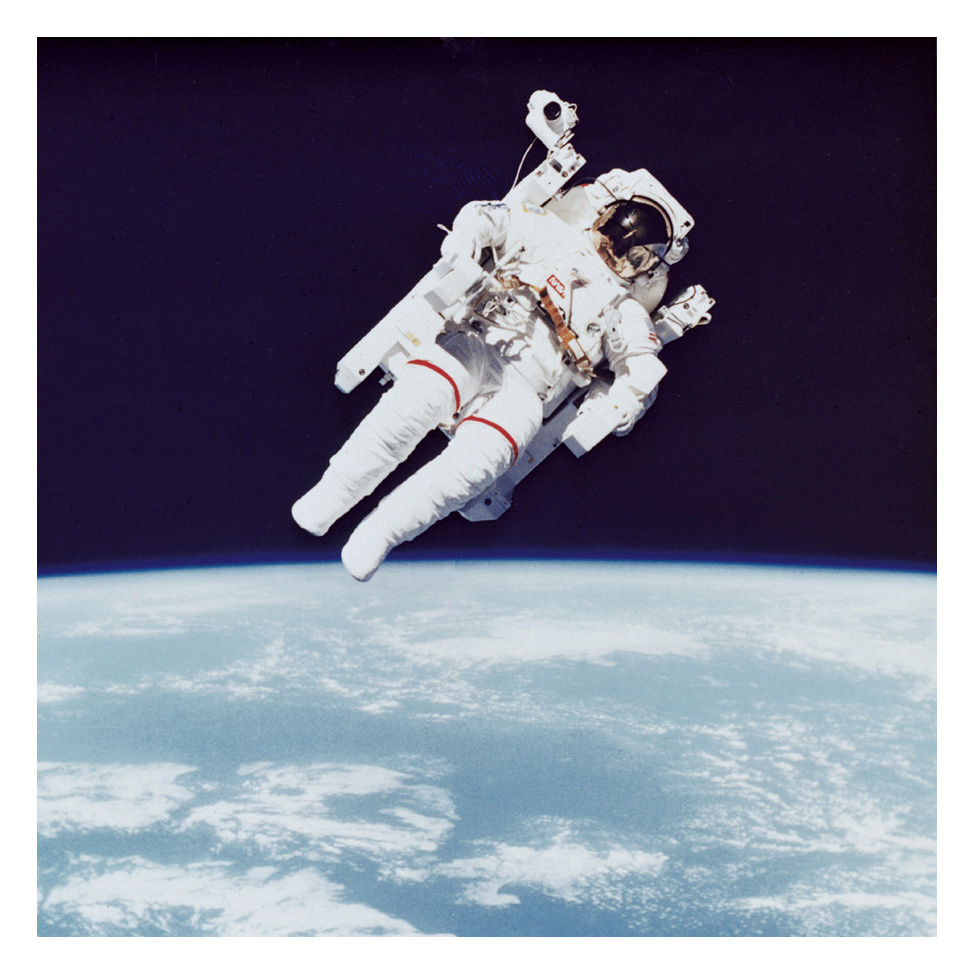
I'm not only more than interested in branding and identity, I still nurture a childhood romanticism for aerospace. This collection satiates both passions.


Danne & Blackburn, New York, New York, 1975


Credits
Design firm: Danne & Blackburn


Credits
Design director: Richard Danne
Designers: Stephen Loges, Richard Danne, Bruce Blackburn


Credits
Project manager: Bob Schulman, NASA


Client
National Aeronautics and Space Administration  


Tuesday, April 12, 2011

Shunmyo Masuno - Zen and the Art of the Garden


ISHIDATE-SO . . . the title given to Zen priests of days gone by, who as part of their ascetic practice,expressed themselves through the art of landscape gardening with great importance given to rock placement. Shunmyo Masuno of Kenkoh-ji temple is a modern day Zen priest who through this art form, strives to express his spiritual self.


The gardens of Japan remain among the country's spellbinding emblems. Created to be looked at, not to be walked through, they are living pictures.

In their most evolved form there is always a place, often a turn in a path or a small teahouse, for a visitor to stand at exactly the right angle.

Earth, trees, stones, water, moss, ferns, flowering shrubs, paths, light and shade all play their parts, none loudly.

"Each component is important, not only the stones or the trees, but sometimes the way a twig is blown with the wind. Each component gives tranquillity and space to visitors and that is where I find peace and success," he says.


If there is a star in the Japanese garden it is the rock. Whole chapters in landscaping manuals are devoted to matters of selection, alignment and character. The world's oldest book on gardening, a treatise called Sakuteiki: Visions of the Japanese Garden, was published about 1000 years ago and began with "the art of setting stones" as its first words. Placed properly, designers say, rocks in a Japanese garden should look like a calf playing near a seated cow or a pack of dogs crouching near the ground.


Scattered like that, they defy symmetry, another clue to success in a Zen garden. "The crooked tree leans at the top of the cliff," he says, in an eerily Carradine-esque moment. "You might think it will fall but it will not and in the garden we can create visual and physical balance."


Mr Masuno, who has created gardens in Norway, Germany and Canada, was this month commissioned to build one in Latvia. In his 350-page manual on creating gardens outside Japan, he despairs at how "extremely difficult" it is to find elegant stones for the garden in foreign countries. He recounts futile field trips to quarries where there are only the cracked, broken or pulverised variety. Even for a Buddhist, life is too short to live with bad rock.

View More Garden Design by Shunmyo Masuno


Friday, April 1, 2011

The Art Project by Google


Google Art Project offers gigapixel images of art classics, indoor Street Views of Museums


Google's been hard at work over the past 18 months on something not many of us have been paying attention to lately: art. Specifically, the search giant has hooked up with 17 art museums around the world to offer tours of their internal galleries, using its familiar Street View tricycles, while also doing high-res images of 1,061 artworks that may be viewed on the newly launched Art Project web portal. Also there, you will find 17 special gigapixel images -- 7,000-megapixel versions of each participating venue's proudest possession. The resulting level of detail is nothing short of astounding and we've got videos of how it's all done after the break.  


The Art Project Features Include:

Explore museums with Street View technology: using this feature, people can move around the gallery virtually on www.googleartproject.com, selecting works of art that interest them and clicking to discover more or diving into the high resolution images, where available. The info panel allows people to read more about an artwork, find more works by that artist and watch related YouTube videos.

A specially designed Street View 'trolley' took 360 degree images of the interior of selected galleries which were then stitched together, enabling smooth navigation of over 385 rooms within the museums. The gallery interiors can also be explored directly from within Street View in Google Maps.

Super high resolution feature artworks: each of the 17 museums selected one artwork to be photographed in extraordinary detail using super high resolution or 'gigapixel' photo capturing technology. Each such image contains around 7 billion pixels, enabling the viewer to study details of the brushwork and patina beyond that possible with the naked eye. Hard to see details suddenly become clear such as the tiny Latin couplet which appears in Hans Holbein the Younger's 'The Merchant Georg Gisze'. Or the people hidden behind the tree in Ivanov's 'The Apparition of Christ to the People'.

In addition, museums provided images for a selection totalling more than 1000 works of art. The resolution of these images, combined with a custom built zoom viewer, allows art-lovers to discover minute aspects of paintings they may never have seen up close before, such as the miniaturized people in the river of El Greco's 'View of Toledo', or individual dots in Seurat's 'Grandcamp, Evening.'

Create your own collection:
The 'Create an Artwork Collection' feature allows users to save specific views of any of 1000+ artworks and build their own personalised collection. Comments can be added to each painting and the whole collection can then be shared with friends and family. It's an ideal tool for students or groups to work on collaborative projects or collections.


Thursday, March 31, 2011

10 Elements - How Mobile Sites Differ from Desktop Sites


Based on research, which looked at a number of mobile sites from various industries, there are 10 fundamental ways in which mobile sites differ from desktop web sites:
  1. In comparison to desktop Web sites, which usually contain a wide range of content and information, mobile sites usually include only the most crucial and time- and location-specific functions and features.
  2. On desktop Web sites, horizontal navigation at the top of a page is a widely accepted way of structuring and presenting a site’s content. However, vertical navigation replaces horizontal navigation on more than 90% of the mobile sites we analyzed.
  3. Hypertext is the signature component of the Internet and the Web. However, on mobile sites, there are few or no hypertexts on pages.
  4. On desktop Web sites, designers use graphics for many different purposes, including promoting, marketing, and navigating. Mobile sites avoid using promotional and marketing graphics and use minimal graphics for navigation.
  5. Various types of navigation are available on desktop Web sites. Some are global, so are consistent across a site, while others are contextual and change depending on where users are on a site. In contrast, while most mobile sites have global navigation, contextual navigation is rare on mobile sites.
  6. On desktop Web sites, footers typically provide either links to content users might expect to see on a site’s home page or quick links that are available across a site to provide access to content users often need. Mobile sites employ a minimal form of the first type of footer, but they do not use footers containing quick links.
  7. On desktop Web sites, breadcrumbs reassure users that they are on the right page and let them backtrack on their navigational path. Breadcrumbs are rare on mobiles sites and really aren’t necessary, because of the relatively flat structure of mobile sites.
  8. Process funnels on desktop Web sites frequently use a progress indicator at the top of each page to guide users through the process. Such progress indicators do not appear on mobile sites.
  9. Mobile sites offer better integration with phone functions—and present marketing opportunities such as facilitating direct orders by phone or sending promotional text messages.
  10. Mobile sites can take advantage of technology that automatically detects where users are to present local search results. When users set up their preferences or profile, personalized search results become even more relevant and valuable to them.

Tuesday, March 22, 2011

JIM DENEVAN -The Sandman

ART Inspiration


Jim Denevan is an American artist from Santa Cruz, California famed for his inspiring temporary land art.


Jim Denevan is an American artist from Santa Cruz, California famed for his inspiring temporary land art.


He makes temporary drawings on Sand, Earth & Ice that are eventually erased by waves and weather.


"There's a freedom and an ability to go anywhere when I'm marking the surface." - Jim Denevan.
The photographs of his work have been exhibited at PS1, part of New York's Museum of Modern Art.

Incidentally, Jim also happens to be an accomplished chef starting his career at age 17 and moving on to be the executive chef at Gabriella Cafe, a 4-Star eatery in downtown Santa Cruz.

To know more about Jim Denevan, you can visit his website at www.jimdenevan.com


Monday, March 21, 2011

Fruit Juice Packaging by Naoto Fukasawa

DESIGN Inspiration

Japanese industrial designer Naoto Fukasawa has created a series of creative fruit juice packages that have the look and feel of the fruit they contain.


“I imagined that if the surface of the package imitated the colour and texture of the fruit skin, then the object would reproduce the feeling of the real skin.”  Along with banana Naoto Fukasawa also offers, strawberry and kiwi fruit  “juice skins”.

Thursday, March 17, 2011

Automobile Maker Volvo Turns Auto Into 3D Graffiti


BRAND Inspiration


Volvo in Switzerland invited 10 "street artists" to paint, spray and design a white Volvo S60 against a white background. A high-end camera snapped an image every ten seconds for the timelapse video above. The event kicked off on February 9th, with each artist given a half-day session as part of a public work-in-progress art event that was held in the grand hall of Zurich's main train station.